Architectural Analysis
An objective review of Nexus Market Verified's history, infrastructure, and deployed security protocols within the Tor hidden service ecosystem.
Executive Summary
Nexus Market Verified operates as a Tor-based hidden service, facilitating peer-to-peer exchange of digital goods and services. Established as a response to the volatility of previous market lifecycles, Nexus implemented a "walletless" payment architecture designed to reduce the risk of centralized fund seizures.
Unlike traditional escrow systems that hold user funds in a central wallet, the Nexus protocol facilitates direct transactions or multi-signature escrows where the marketplace holds only a signing key, rather than full custody of assets. This architectural decision significantly mitigates exit scam vectors and external seizure risks.
Technical Infrastructure
Cryptocurrency Protocol
- Bitcoin (BTC) SegWit Supported
- Monero (XMR) Subaddress Only
- Litecoin (LTC) MWEB Compatible
Security Standards
- PGP 2FA Mandatory
- Mirror Verification Signed Rotation
- Session Timeout 15 Minutes
Observation: The platform utilizes a custom-built backend, distinct from common market scripts like Eckmar or Carbon. This suggests a dedicated development team focused on operational security (OpSec) rather than reselling white-label solutions.
Interface Analysis
The following captures illustrate the user flow and security checkpoints deployed by Nexus Market Verified.
DDoS Mitigation & Captcha Challenge
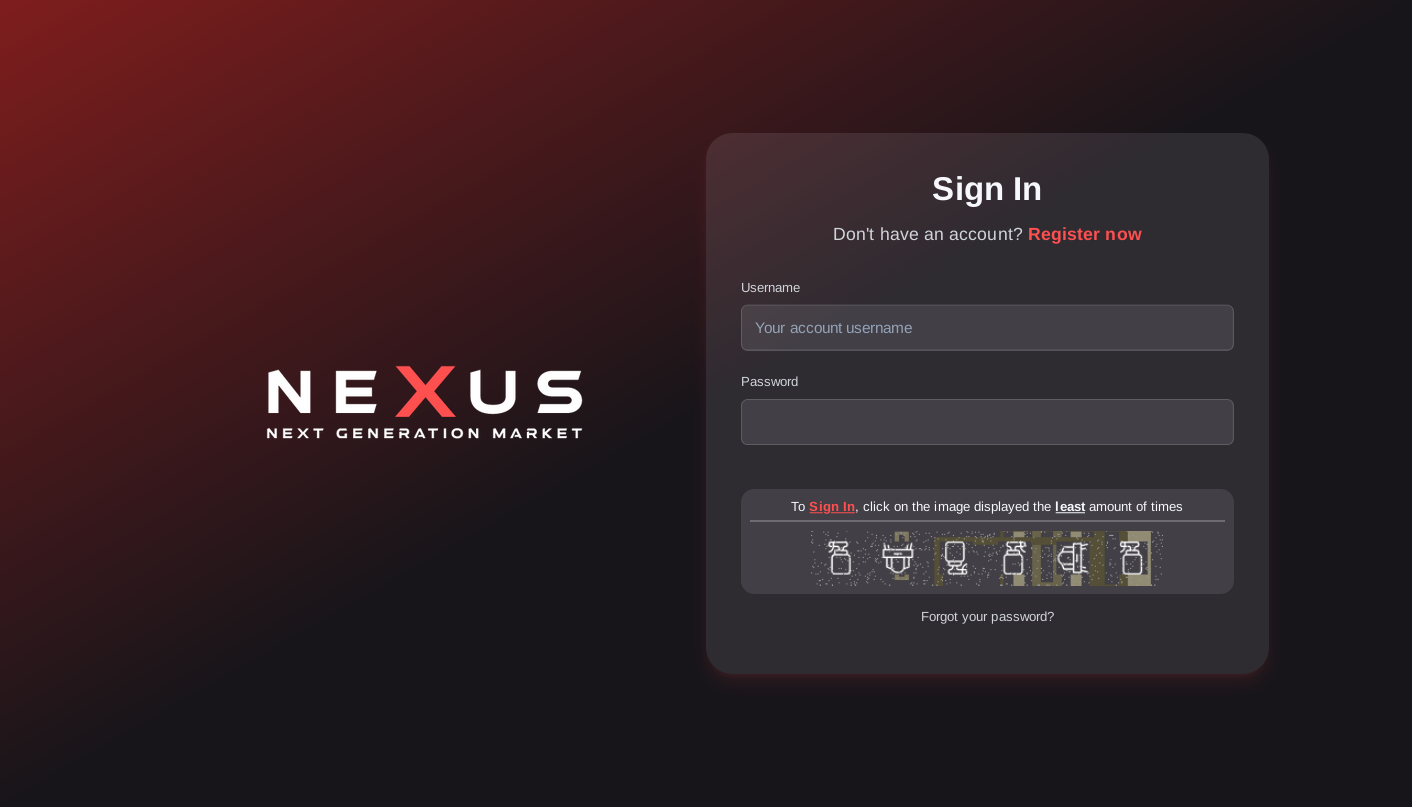
PGP 2-Factor Authentication Login
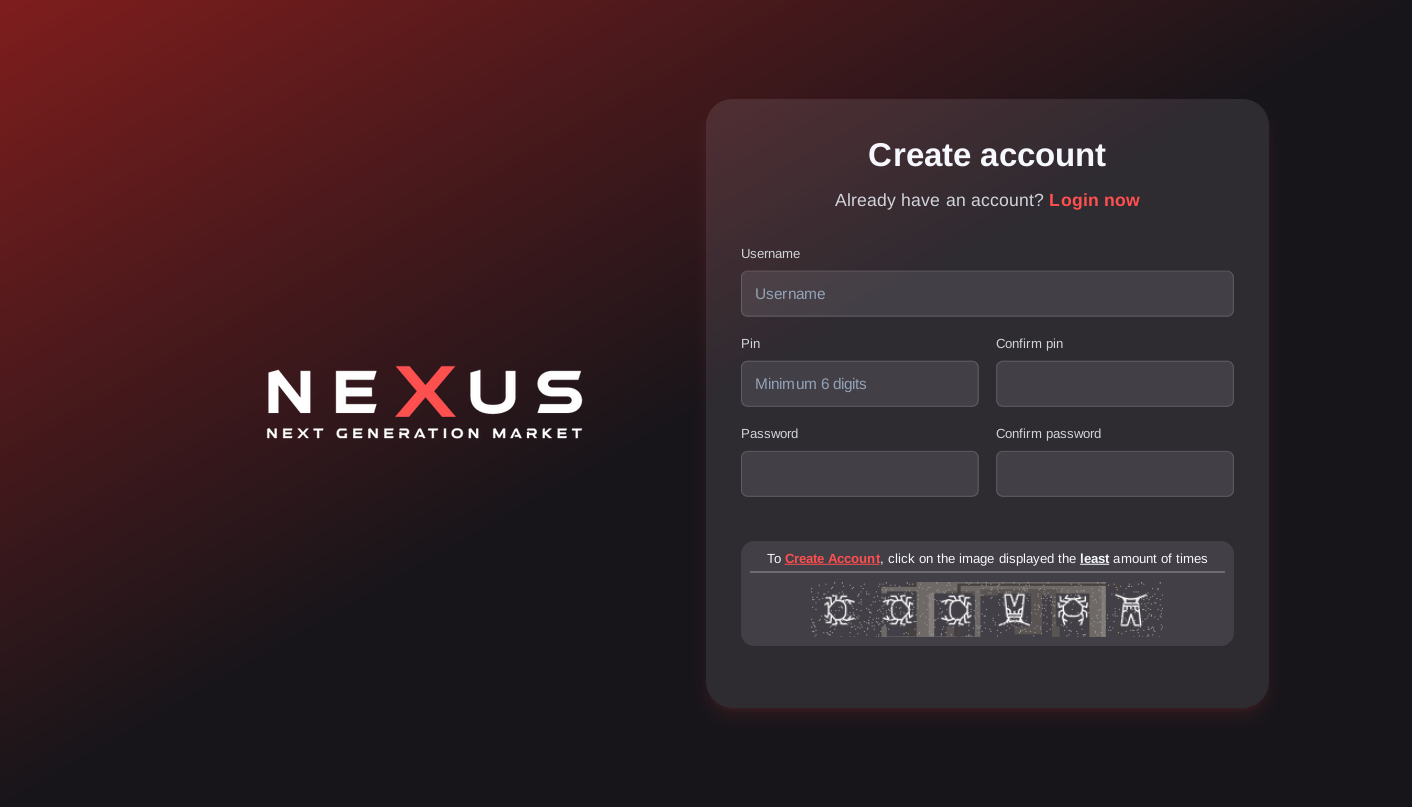
Anonymous Account Generation
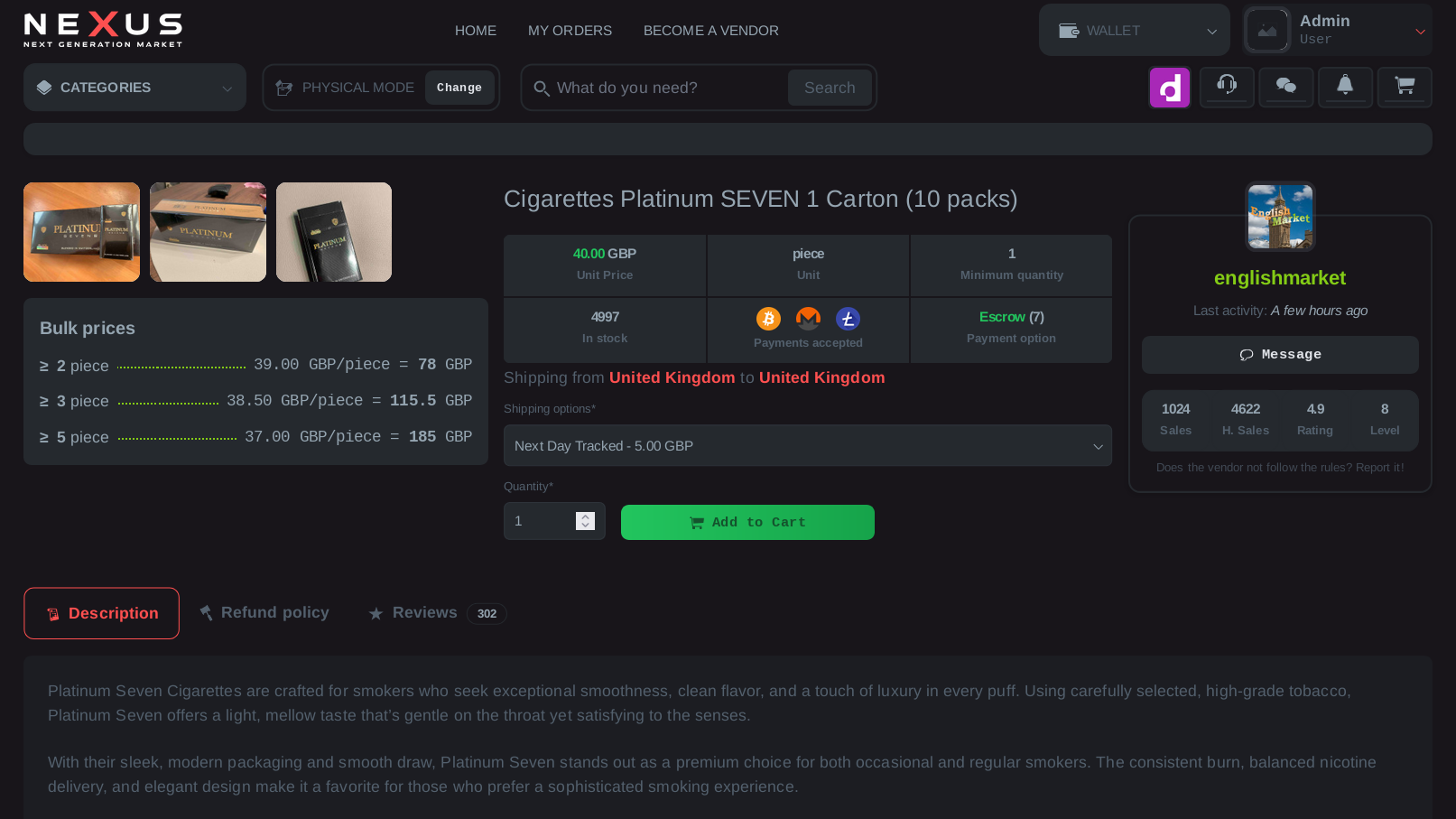
Main Listing Index & Search
Operational Timeline
Beta Launch
Initial onion services deployed. Private invite-only access period for vendor onboarding.
Public Release
Restriction mechanism lifted. Walletless pay system integrated for BTC and XMR.
Infrastructure Upgrade
Migration to V3 Onion services with enhanced PoW (Proof of Work) DDoS guard.
Stable Operation
Platform maintains 98% uptime. Active bug bounty program for security researchers.